Singapore Motorcycle
Licence Guide
Class 2B, 2A, and 2 – everything you need to know about riding legally in Singapore. From BTT to circuit test, full step-by-step guidance for new riders.
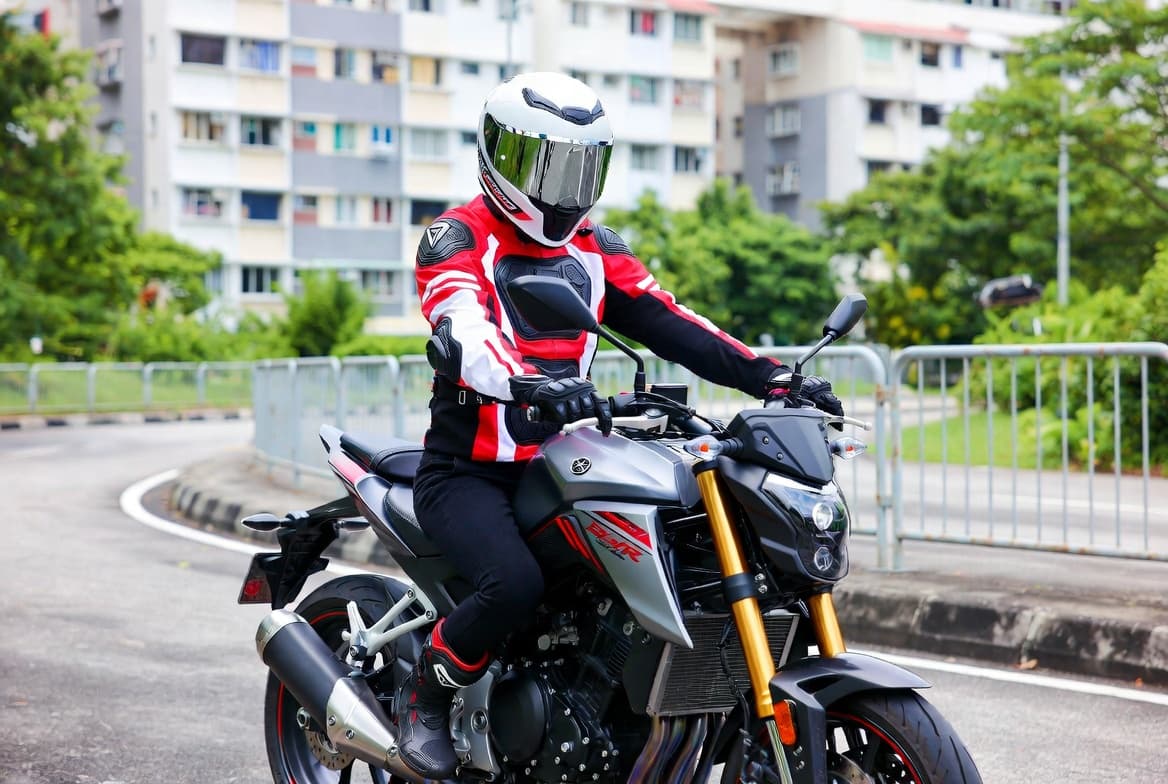
The Three Singapore Motorcycle Classes
Singapore uses a progressive licensing system for motorcycles. You must start with Class 2B and work your way up. Each class opens up more powerful machines.
Class 2B
Up to 200cc / 12kWWho It's For
First-time riders, young adults, and daily commuters. Class 2B is the starting point for all new motorcyclists in Singapore.
Example Vehicles
Class 2A
201cc–400cc / 12–25kWPrerequisites
Must hold Class 2B for at least 1 year before applying. Minimum age of 18 years. You must re-sit all required tests for Class 2A.
Example Vehicles
Class 2
Above 400cc / above 25kWPrerequisites
Must hold Class 2A for at least 1 year. In practice, reaching Class 2 takes a minimum of 2 years from when you first obtained Class 2B. No engine restrictions once you hold Class 2.
Example Vehicles
Progressive Licence System – Upgrade Path
BTT for Motorcycle Licence Applicants
The Basic Theory Test (BTT) is your first hurdle. It is the same test as for car licence applicants, covering Singapore traffic laws, road signs, and road safety.
- Same BTT format as car licence applicants – 50 MCQ, 45 minutes, 90% pass mark (45/50)
- Minimum age: 16 years for Class 2B; 18 years for Class 2A and Class 2
- Must pass BTT before applying for PDL and starting practical lessons
- Can be sat at any of the three ADCs (CDC, BBDC, SSDC) or the TP Driving Test Centre
- Available in 6 languages: English, Mandarin, Malay, Tamil, Tagalog, and Hindi
BTT Study Tips
- Study the Singapore Highway Code thoroughly – all questions are based on it
- Pay special attention to road signs, speed limits, and right-of-way rules
- Practice with hundreds of BTT questions on SGDriving.sg before booking your test
- Aim for 95%+ in practice tests before sitting the real BTT
Motorcycle Practical Training at ADCs
Practical training is divided into two stages: circuit training and on-road training. Both must be completed before you can sit your TP riding test.
Stage 1 – Circuit Training
Minimum 12 lessons at ADCCircuit training is conducted entirely within the ADC's training compound. You will learn fundamental riding skills in a safe, controlled environment before venturing onto public roads.
Skills Covered in Stage 1
- Motorcycle balance and slow-speed control
- Clutch control and smooth gear changing
- Turning and cornering techniques
- Emergency braking from speed
- Obstacle avoidance (swerving)
- Simulator training (available at CDC, BBDC, SSDC)
Stage 2 – On-Road Training
Minimum 8 lessons on public roadsAfter completing Stage 1, you'll progress to riding on actual public roads in Singapore under the supervision of your ADC instructor. Routes are designed to expose you to real-world riding conditions.
What You'll Encounter in Stage 2
- Various road types: single-lane, multi-lane, dual carriageways
- Junctions, traffic lights, and roundabouts
- Expressway riding (PIE, AYE, etc.)
- ERP gantries and road pricing areas
- Lane discipline and positioning
- Hazard perception and defensive riding
Motorcycle Circuit Test Exercises
The circuit test consists of 6 exercises that test your fundamental riding skills. Each exercise carries demerit points for errors – accumulate too many and you fail.
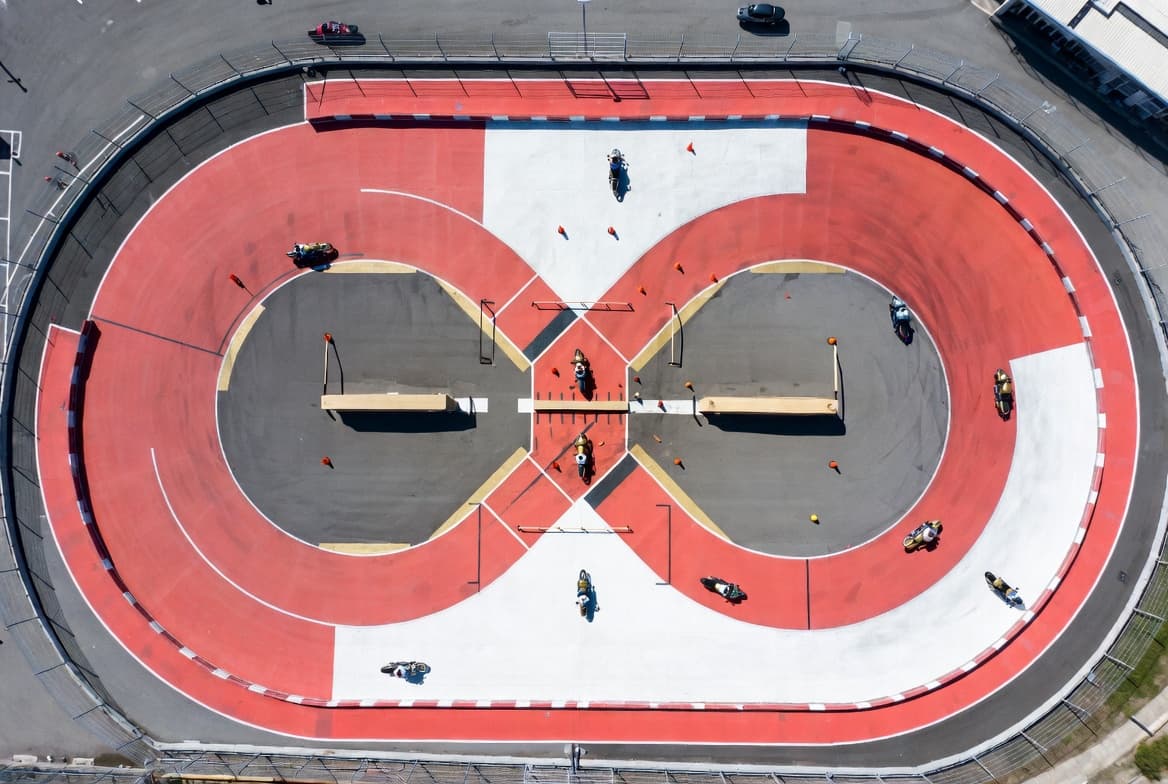
Circuit Test Demerit System
Demerit points are awarded for errors during each exercise. Common demerits include:
- Foot touching ground (balance beam, slow ride)
- Crossing boundary lines (figure-8, U-turn)
- Failing to stop within marked zone (emergency brake)
- Rolling back on slope (Class 2 and 2A)
- Immediate failure: motorcycle fall / hitting cone
Ride slowly along a narrow plank or marked lane without putting your foot down. Tests balance and throttle control at very low speeds – the hardest skill for many beginners.
Navigate a figure-8 shaped course within cone boundaries without crossing the lines. Tests tight-space maneuvering and clutch control.
Execute a complete U-turn within a designated confined area without putting your foot down or crossing boundaries. Requires precise slow-speed balance.
Accelerate to 30 km/h (indicated by a signal), then brake to a complete stop within a marked zone. Tests reaction time and braking technique.
Start from a standstill on an incline without rolling backwards. Requires coordinated use of clutch, throttle, and rear brake. Not required for Class 2B.
Ride towards a triggered signal at speed and swerve left or right to avoid a simulated sudden obstacle, then continue straight. Tests emergency evasive action.
Safety Equipment for Motorcyclists
Wearing the right gear can save your life. Know what is legally required and what is strongly recommended.
Helmet
Helmets are legally mandatory for both the rider and pillion passenger. The helmet must meet the approved standard: UN ECE 22.05 or the equivalent Singapore standard (SS 95). The chin strap must always be fastened securely.
Footwear
Closed-toe shoes are required during practical lessons and the TP test. Sandals, flip-flops, or bare feet are not permitted. Ankle-covering boots are strongly recommended for better protection in a fall.
Full Protective Gear
- Riding jacket with CE-rated armour (shoulders, elbows, back)
- Riding gloves (protect hands in a fall)
- Riding pants with knee/hip armour
- Ankle-height motorcycle boots
- High-visibility vest (not compulsory but aids visibility)
Motorcycle-Specific Road Rules in Singapore
Beyond the general Highway Code, there are specific rules and regulations that apply to motorcyclists in Singapore.
Lane filtering (riding between lanes of slow/stopped traffic) is NOT permitted in Singapore. You must stay within your lane at all times, even in congested traffic.
You may carry a pillion (passenger) after holding your licence for at least 1 year. However, P-plate holders cannot carry any pillion passenger during the 1-year P-plate period.
Class 2B motorcycles are permitted on expressways. There is no engine restriction for expressway use in Singapore. Always maintain safe speeds and following distances.
Modified or aftermarket exhausts that exceed legal noise limits are illegal in Singapore. The fine is up to $2,000. Your bike must comply with original manufacturer specifications.
Performing wheelies, stoppies, or any form of dangerous stunting on public roads is a serious offence in Singapore. Penalties include fines, disqualification, and imprisonment.
Weaving aggressively between vehicles or lane-splitting through traffic is not legally permitted. Ride in a single lane within marked boundaries.
Your helmet must always be properly fastened with the chin strap secured. Riding with an unfastened helmet is an offence and defeats the helmet's protective purpose.
Motorcycles must park in designated motorcycle lots. Parking in car spaces or obstructing pedestrian paths is illegal. Many HDB carparks have dedicated motorcycle lots.
Motorcycle Licence Cost Guide
Getting a motorcycle licence is significantly more affordable than a car licence. Here are the typical cost estimates for Class 2B.
| Item | Estimated Cost |
|---|---|
| ADC Registration Fee | $20 – $25 |
| BTT Booking Fee | $6.50 |
| FTT Booking Fee (Class 2B: NOT required) | Waived |
| Practical Lessons (per lesson) – Class 2B | $25 – $35 |
| Minimum lessons needed (approx) | ~20 lessons |
| TP Test – Circuit | ~$35 |
| TP Test – Road | ~$50 |
| Total Estimated – Class 2B | $800 – $1,500 |
These are estimates only. Actual costs vary. Class 2A and Class 2 will require FTT ($6.50) and may require more lessons. Contact your chosen ADC for current fees.
Typical Total Costs by Class
A motorcycle licence is typically $1,500+ cheaper than a car licence, making it a popular first choice for many Singaporeans.
P-Plate Rules for New Motorcyclists
After passing your TP test, you must display the P-plate and follow additional restrictions for your first year of riding.
Display P-Plate
Must display the red P-plate on the rear of your motorcycle for the full 1-year probation period.
13 Demerit Points
P-plate holders have a lower demerit limit of 13 points (vs. 24 for full licence holders). Exceeding this results in licence suspension.
No Pillion Rider
P-plate holders are not permitted to carry any pillion passenger during the 1-year probation period, without exception.
70 km/h Speed Limit
P-plate motorcyclists are limited to a maximum speed of 70 km/h on all roads, including expressways where the usual limit is 90 km/h.
Frequently Asked Questions – Motorcycle Licence
Common questions from aspiring motorcyclists in Singapore
Continue Your Riding Journey
Explore more guides to help you prepare for your motorcycle licence
Ready to Hit the Road on Two Wheels?
The first step is passing your BTT. Start practising today with SGDriving.sg's free, no-login practice tests – the same format as the real exam.
100% free – no sign-up required